Smart & drip / Wichita Falls
Drip Irrigation in Wichita Falls, TX
Drip puts water where plants can use it. We repair clogged and chewed drip lines and install new drip zones for beds, shrubs and trees, with a timer that fits how you want to control them.
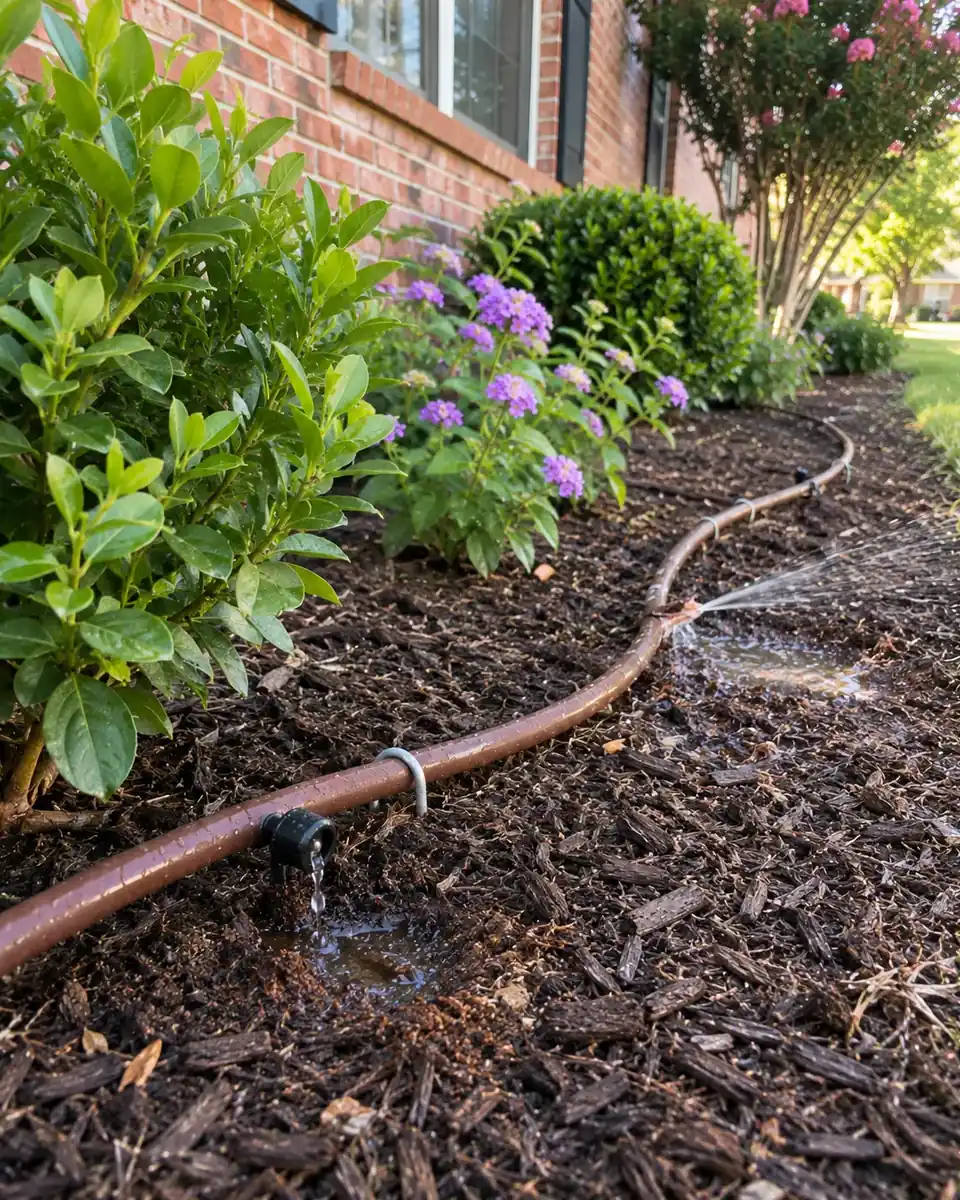
You may notice
- Plants that are wilting beside a wet line
- Emitters that spray, clog or have fallen out
- Line chewed by animals or cut by a trowel
- Overspray on walls and windows from beds
- Beds that dry out between cycles
What we do
Drip irrigation delivers water slowly, at the base of the plant. Less water is lost to wind and evaporation, and leaves and walls stay dry. It also fails differently from a spray system. A small clog or chewed line can leave one plant thirsty while the rest look fine.
Walk the line. We run the zone and look for dry plants, wet ground and emitters that are not working. Drip failures are quiet, so we check each run.
Repair what is damaged. Cut or chewed tubing is repaired. Clogged emitters are cleaned or replaced, and fittings are secured so they stay put.
Check pressure and filtering. Drip needs lower pressure than spray. We confirm a regulator and filter are in place and working.
Design new drip zones. We place emitters by plant type and size, and separate drip from spray so each is watered properly.
Pick the control path. Drip can run from your main controller, a hardwired timer or a battery timer. We help you choose by access and use.
What this helps with
- Planting beds, shrubs and trees
- Reducing overspray on walls and fences
- Water use in dry months
- Converting beds from spray to drip
- Small gardens and raised beds
What shapes the estimate
Drip repair is usually inexpensive, since most of the work is tubing, emitters and fittings. The estimate depends on how many runs need attention and how easy they are to reach. A bed full of old, brittle tubing may be better replaced than patched.
A new drip zone depends on bed size, plant count and the control path you choose. A battery timer on a single bed is a simple job. A hardwired valve and filter assembly with several zones is more involved. We describe each option and what it costs to run.
Before we arrive
Drip problems are easy to spot if you know where to look.
- Note which plants look dry and which look fine.
- Mark any wet spots along the drip line.
- Tell us how the line is controlled today.
- Let us know if animals have been chewing near the beds.
Drip in a dry North Texas summer
Hot, dry summers mean beds lose water fast to evaporation. Drip waters the root zone directly and keeps wind from carrying it away. It suits shrubs, trees and perennial beds, and it fits into a city that has used staged drought restrictions.
Clay soil takes water slowly, which suits low-flow drip. Over time, drip lines can shift or float to the surface, so we stake and cover them. Check the city site for how current watering rules apply to drip. Rules for drip can differ from spray, and we do not assume they are the same.
Questions we hear
Is drip better than spray for flower beds?
For most beds, yes. It reduces overspray and delivers water to the roots. Turf is still best served by spray or rotor heads.
Why are some of my plants dry on a drip zone?
A clogged emitter, a cut line or low pressure is the usual cause. We find it by running the zone.
What timer options are there?
A smart Wi-Fi controller, a hardwired timer or a battery timer. Each suits a different property.
Can you convert spray heads in a bed to drip?
Often, yes. We cap the spray head and run drip line to the plants.
Do animals damage drip lines?
Sometimes. We repair chewed lines and can bury or cover tubing to reduce it.
Active problem / call directly
Do not wait on a spreading problem.
Water moving where it should not, a zone that will not stop or a system that froze. Call, and we will tell you how to shut it off safely and what to do next.
A better first step
Request an estimate for drip irrigation.
Tell us what you see. We diagnose first, explain the likely cause and give you a clear next step before work begins.
Related services